Wednesday, June 16, 2010

New Island: the movie


New Island is up on YouTube ! This is a tour of the exhibition with questions-and-explanations!

Thursday, June 10, 2010

Houses, Land Now for Sale on New Island

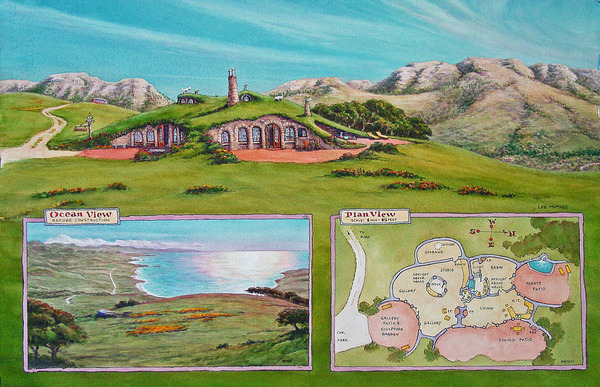
These two houses in Capetown are for sale! 
The painting along with the land is available.

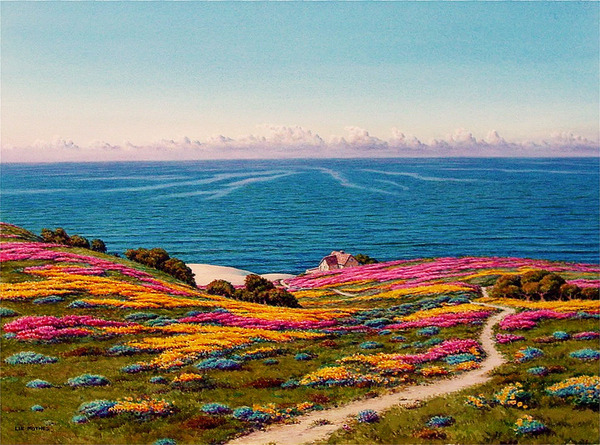
This is one of six new listings of New Island property for sale.  The original watercolor painting, titled "Dune Village" comes with the listing below, complete with a satellite view of the site. A satellite view of an imaginary place?  This too is a watercolor and comes with the painting!  All for $450.

 See this listing and many more paintings, drawings, maps and artifacts of New Island at the Oceans and Dreams Gallery beginning this coming Friday evening 6-9 pm, and continuing through August 2010. The Gallery is upstairs above the KC&T Coffee Shop at 127 W. Wisconsin Ave. Kaukauna, WI  54130.  I hope to see you there!

Monday, May 31, 2010

New Island Exhibition Arrives in Kaukauna, Wisconsin USA

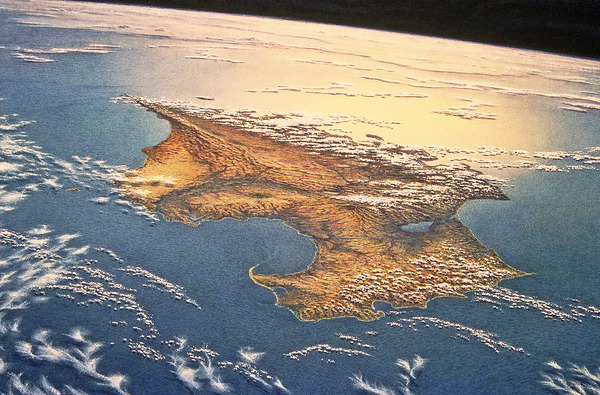
New Island will  present its entire art collection of landscapes, beach paintings, drawings, original maps, and a wide variety of artifacts such as the island's flag, coat-of-arms, printed maps, the guide book, coins, postage stamps, and sand samples from some of the island's beaches! Listings for available land on the island will be on display for the first time. New Island's artist-ambassador Lee Mothes will host an evening reception from 6 to 9 pm on Friday June 11, 2010.

Come and enjoy refreshments while exploring this 12,600-square-mile work of art!

Imagine having your own property on New Island! Anyone 13 and older is invited to claim land on the island, then think about a second home on the beach, a writer's retreat, a business, a vineyard, a dance studio, or other dream. Deeded parcels of New Island acreage are now available, and will be on display at the Gallery. To help make your dream place "real", Lee will create a painting of your improvements if you wish. You may also simply state your dream, or make your own images, and have it all posted on the New Island website.


New Island is being hosted by the Oceans and Dream Gallery, located above the Kaukauna Coffee and Tea coffee shop at 127 W. Wisconsin Ave., Kaukauna, WI.

Northeast Wisconsin is easily accessed by airports in Green Bay and Appleton. Both are near US Highway 41.  Get on 41and then follow the map at left.

We hope you can make it!

Thursday, April 22, 2010

Education

All New Island children, whether from tribes or towns, attend a public school or are home-schooled. Kids begin primary school at age five and study math, science, history, social skills, reading, writing and drawing for about six years. They also hear and sing a variety of music, from old Irish folk ballads to rock and roll. They begin high school at age 11, where they learn among other subjects, the seven basic skills, those subjects thought to be the most nourishing for young minds. Private boarding schools, in the English tradition and in the Japanese tradition, offer programs with emphasis on the arts, science, engineering, traditional crafts or spirituality.

The Seven Basic Skills are:

1. Animal and plant husbandry
2. House design, building and transportation maintenance
3. Food-and-nutrition, simple medicine, physical health, massage therapy
4. Literacy: reading, writing, communicating skills
5. Visual depiction: Drawing, painting, sculpture, design and art history
6. Math and science: from arithmetic to the Gaia Concept
7. Spirituality: loving, caring, being, music and dance

After public school, Putney University, New Island's oldest (and only) university, offers degrees in Holistic medicine, Engineering, Oceanography, Sustainability, Social Issues/Religion, Fine Arts, Traditional crafts, Spirituality, and other more esoteric fields. Victoria College in Penhill (near Victoria Harbor) offers studies in marketing, accounting, industrial design, software development, and the like. Many high school graduates might choose one of the isolated 'outback colleges' for esoteric studies in Tantric Yoga, Art of tatoo, Zen meditation; Blues, Reggae, and African music; Organic produce production, book design and bookbinding, living-on-nothing, and Advanced being.

Next: The Great Walk

Sunday, April 11, 2010

Growing up on New Island

Children grow up with lots of help from not only from their parents but from aunts, uncles, grandparents and nearby neighbors as well. This is especially true in tribe settlements and tribal neighborhoods.

Kids learn from nature first-hand by wandering the countryside and exploring among the plants, rocks, bugs, creek beds and beaches, knowing they are trusted to not do stupid things; to look before they leap! They are literally pushed out the door when the usually mild weather allows it; and are generally ignorant of TV, electronic media and cell-phones. (Only within the last five years have computers been introduced in schools!)


Kids run free most of the time here. The general
rule is that they have to be home by dark.


Kids likely grow up in houses hand-built by their own parents or grandparents, and are often asked to help with repairs or additions. Many kids wind up building their own bedrooms or small cottages in the yard! Children can wander among different neighboring families and sometimes stay with their friends' families for long periods. Older kids (10 years +) often move in with a friend or cousin, yet still keep close to their parents. This way, kids get practical experience, and learn to socialize with other parent-figures a variety of siblings.

Kids are loved and nurtured with games, stories, art projects, and help with emotional upheavals. In raising their offspring, most parents have found that hugs, vitamins and benign neglect seem to work the best.

They rarely get bored!

Next: Education


Saturday, April 10, 2010

Gardening

A garden planted in beach sand near Samas, on the island's
western shore. A note to sand-gardeners: for lush
growth in sand, mix old manure or peat from the local bog
about 50-50 with sand, plan t your plants or seeds,
then water thoroughly.
(Courtesy Samas and Lizard Garden club)

Gardens in front of some getaway cottages in the dunes near
the Hook, a sandy peninsula at the island's west end.


Islanders express their love of nature by planting whatever they can find around their homes, preferring near-chaotic combinations of herbs, climbing vines, fruit trees, veggie patches and wildflowers to formal hedges or lawns. Indeed, much of the island is too dry most of the year for lawns. Instead, islanders favor miniature desert or dune gardens with succulents, or wild grass gardens with a fish pond, or they just let nature take its course. Many settlers have left their surroundings un-gardened altogether except for a kitchen garden for food.

Tuesday, March 23, 2010

New Island Houses

Imagine comfortable houses built with local materials, (see pictures) that cost about $800.(US) and can biodegrade!

Housebuilding has been a do-it-yourself tradition on New Island, and is taught as one of the Seven Basic Skills. Individuals usually purchase (claim) an available site, and then build or design their own house or retreat. Houses tend to be small (about 1500 sqaure feet or less) and are built with clay or adobe brick, cement-sand brick, wattle-and-daub (mud covering woven branches) or straw bales-and-stucco; with wood-frame roofs, trim, windows and doors. Imported steel is used to reinforce clay and cement-sand walls. Locally-made glass is used extensively including fiberglass for insulation. Plastics have been limited to plumbing pipe and wiring insulation.

Typical houses on New Island.
This is the settlement of Brandonbeach, on the isolated
southwest coast.
It is on the Irian-Southwestern railway,
and the South-West Path, but no roads lead to it!

More typical houses.
This is the commons in Sapphire,

a tribe-settlement on the edge of the Sheffield Desert.
Art by Lee Mothes

Islanders enjoy building! They commonly camp out on their sites for a while to get the feel of how their house might best fit: Aesthetics, the slope, the views, sun-or-shade requirements, garden areas, neighbors and access are usually the biggest considerations. House-raising is often a community event, especially in tribes, where neighbors pitch in to build the foundation and framework, and then the owner usually finishes the details.